New York, NY — Audio Services

Professional sound,
without the
overhead.

We provide recording, mixing, live sound, and production support for artists, organizations, and teams who need an engineer they can trust — start to finish.

See Our Work Get in Touch

Our services

We work across recording, live production, and post-production — wherever sound matters. Our clients include independent artists, venues, cultural organizations, and media teams who need a dependable technical partner.

01
Audio Engineering

Mixing and mastering for music, podcast, and spoken-word projects. We bring a detail-oriented, standards-driven approach to every session — clean balances, consistent levels, and delivery to spec across formats and platforms.

02
Music Production

Full production support from arrangement through final mix — working with artists across genres to develop their sound and bring recorded ideas to life. We work in Pro Tools, Logic Pro, and Reaper, in-studio or remotely.

03
Post-Production & Sound Design

Editing, sound design, and audio post for film, video, and documentary projects. Comfortable with dialogue cleanup, SFX, Foley, and final mix delivery — with graduate-level research background in perceptual audio and spoken-word clarity.

04
Voice Services & Narration

Available both as talent and as engineers. As talent, we offer clear, warm narration for documentary, commercial, and educational content. As engineers, we record, edit, and deliver other people's voice work to broadcast and streaming specs.

05
Coaching & Lessons

One-on-one instruction in audio engineering, music production, and DAW workflows. Suited to artists learning to produce their own work, hobbyists building a home studio, or anyone looking to develop a more disciplined technical practice.

Let's talk about
your project.

Based in New York City. Available for recording, production, post-production, voice work, and coaching. Open to one-off projects and ongoing relationships.

Music Production · Recording

Original Composition

An original piece written and recorded in collaboration with David Morgan. Guitar, bass, drums, and virtual instruments — tracked, arranged, and mixed start to finish.

NYU Music Tech Original — Ryan Carey & David Morgan
Audio Engineering · Before & After · Coming Soon

Helpless — Bedroom to Studio

A before-and-after engineering showcase: a home recording of a Neil Young cover, reworked to demonstrate what production and mixing can do to raw tracked material. In progress.

In Progress
Binaural Recording · Spatial Sound Design

Binaural Field Recording & Spatial Sound Design

A Neumann KU-100 field recording session in a live gymnasium environment, followed by virtual sound object integration using convolution reverb and binaural spatialization — without an impulse response of the recording space.

Original Binaural Recording
With Virtual Objects

The Recording Setup

A Neumann KU-100 dummy head microphone was positioned on an elevated running track above a gymnasium floor — roughly centered above the court, looking down at a live volleyball practice. The elevated position placed the primary sound sources below the mic plane, which has direct implications for the spatial design work that followed.

The KU-100's capsule geometry and pinnae are designed to replicate human head-related transfer functions, making it well-suited for capturing environments where lateral localization is meaningful. A volleyball court is a particularly effective demonstration: the ball moves discretely left and right across the court, and on headphone playback the binaural image tracks that movement clearly with no visual information required. Inter-aural time and level differences do the work.

The recorded scene included player voices, sneaker impacts on hardwood, whistle cues, ball strikes, crowd bleed from an adjacent court separated by a heavy acoustic curtain, and low-level ambient music from elsewhere in the building.

Spatial Sound Design: Working Without an Impulse Response

The post-production challenge was integrating virtual sound objects into the recorded space without an impulse response of the gym itself. Without a measured IR, there's no ground truth for the room's reverb time, pre-delay, or frequency-dependent decay — all of which have to be approximated by ear against the recorded material.

Large gymnasium acoustics have a recognizable character: long decay times, prominent early reflections off hard parallel surfaces, and significant high-frequency rolloff at distance due to air absorption. Because this acoustic environment is familiar to most listeners, placement errors are perceptible even without critical listening training.

The processing chain for each virtual object used two plugins in sequence in Pro Tools: Space (convolution reverb) for acoustic environment matching and distance simulation, followed by dearVR Micro for binaural spatialization with azimuth and elevation control. No two source samples shared identical processing — each had its own recorded acoustic signature that had to be addressed before spatial placement.

Specific Placement Decisions

Crowd bleed through the curtain: Target position 14° azimuth, -27° elevation. The negative elevation reflects the recording geometry — the mic was above the floor. The Buiksloterkerk IR (a large reverberant church space) was used for the convolution stage to simulate acoustic distance and diffusion. The choice of a dissimilar IR is intentional: convolution reverb here isn't meant to accurately replicate the gym — it's meant to create a sense of enclosure and distance that allows the sound to sit behind the curtain rather than float in the immediate space.

Whistle and buzzer: Placed at the same azimuth but different elevations. The buzzer received positive elevation — buzzers in gymnasium environments are typically ceiling-mounted, and the elevation cue contributes to placement plausibility. The whistle, originating from floor level, was given negative elevation to match the recording geometry.

On Sample Matching

Two crowd samples were used, sourced from different libraries with different recorded acoustic characters. Applying the same convolution IR to both would have introduced detectable processing artifacts — the spectral coloration of an IR applied to already-reverberant material compounds in ways that become audible on careful listening. Each was treated with a different IR chosen to complement rather than conflict with its existing acoustic character, then spatialized independently. This per-element treatment is standard practice in film and television sound, where the editor is almost never working with an IR of the original recording location.

Spatial Audio · Post-Production

5.1 to Binaural Conversion

A Pro Tools signal chain for converting multichannel surround content to binaural and stereo outputs using the Sparta Binauraliser with SADIE HRTFs and dearVR PRO 2.

Stereo Downmix
Binaural Render

Why not convolve a mono source with per-channel HRIRs?

The intuitive approach — take a mono signal, duplicate it, and convolve each copy with an HRIR corresponding to a target speaker position — doesn't work well, and it's worth understanding why. The spatial information in a multichannel mix lives in the differences between channels. A proper 5.1 mix has discrete content at each speaker position: dialogue anchored to center, effects panned across the field, surround content in the rears. Applying different HRIRs to copies of the same mono signal doesn't replicate that — it produces a single source with multiple colored versions of itself summed together, which tends to sound phasey and spatially unconvincing. The binauraliser needs real per-channel content to work with.

Signal chain: binaural render

Starting with a native 5.1 source file, the routing in Pro Tools: 5.1 audio track → 5.1 aux (processing) → stereo aux (binaural output). Plugin on the stereo aux: Sparta Binauraliser v1.7.0 with SADIE database subject H6 SOFA as the HRTF. Speaker positions set to 30°, -30°, 0°, 110°, -110° (standard 5.1 layout). Interpolation mode: Triangular (PS). Output captured to a stereo audio track via internal record, then bounced.

The SADIE H6 SOFA is a well-validated general-purpose HRTF, widely used in academic and research contexts and compatible with any binauraliser that accepts SOFA-format files. Sparta's Triangular PS interpolation handles panning between measured HRIR positions cleanly without introducing artifacts at boundaries.

Signal chain: stereo downmix

The same 5.1 source was routed to a separate aux dedicated to downmix processing. Plugin: dearVR PRO 2, output format set to 2.0 Stereo (2CH). A small amount of reverb was retained — fully dry, certain transients in the source material produced audible artifacts, likely a characteristic of the original recording rather than the plugin. Keeping the binaural render chain and the downmix chain separate allows independent A/B comparison during review.

On HRTF selection

HRTF choice matters more than is often assumed. Individual HRTFs vary significantly in elevation cues and front/back localization characteristics — a set that produces convincing externalization for one listener may collapse to in-head localization for another. For delivery contexts where individualized HRTFs aren't practical, a well-validated non-individual set like SADIE H6 or KEMAR is a reasonable starting point. For critical listening or immersive content intended for wide release, testing across multiple HRTF sets is worthwhile.

Sound Design for Film · Additional Mixing & Production Work
Available on request

Let's talk about
your project.

Based in New York City. Available for recording, production, post-production, voice work, and coaching.

Stoop Sound is a New York City audio services company built around the idea that great sound engineering doesn't require a sprawling studio infrastructure — it requires the right engineer. We work across recording, music production, post-production, voice work, and one-on-one instruction, bringing the same standards to every project regardless of size or format.

Our name reflects our values. A stoop is approachable, neighborhood-rooted, and unpretentious — but it's also the front door of something real. That's how we think about the work: no overhead, no mystique, just reliable craft and honest communication from first contact through delivery.

We're built for clients who want an engineer they can actually talk to — someone who understands both the technical side and the creative goals, and who treats both with equal seriousness.

Clean workflows

Organized sessions, clear signal paths, and deliverables that meet spec — every time.

Calm under pressure

Live events and studio sessions both go sideways. We troubleshoot quickly and keep the focus on the work.

Technical partners

We work with non-technical collaborators regularly and know how to communicate across that gap.

Honest about scope

We take on projects where we can genuinely deliver. If something's outside our wheelhouse, we'll say so.


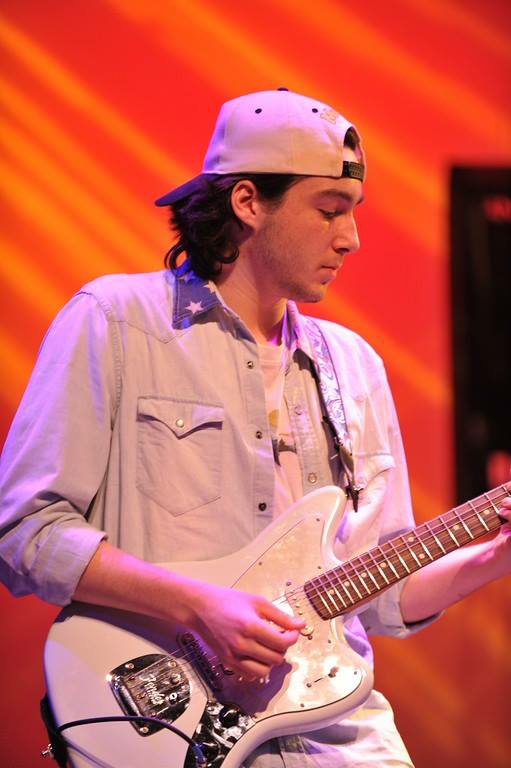
Ryan Carey

Ryan Carey

Founder & Lead Engineer

Ryan is a New York City-based audio engineer and producer with a background spanning studio recording, music production, post-production, voice work, and one-on-one instruction. He founded Stoop Sound to make professional-quality audio services more accessible — without the overhead, the mystique, or the runaround.

He holds a Master of Music in Music Technology from New York University, where his graduate research investigated how audio format — mono, stereo, and binaural — affects listener engagement and comprehension in spoken-word media. The work combined controlled recording sessions, structured listening tests, and perceptual audio analysis, and reflects the kind of careful, evidence-based thinking he brings to every project.

He is fluent in Pro Tools, Logic Pro, Reaper, and Final Cut Pro, and is comfortable working in-studio or remotely.

M.M. Music Technology — New York University, 2026
Pro Tools · Logic Pro · Reaper · Final Cut Pro
Recording · Production · Post-Production · Voice · Coaching
U.S. & EU Citizen

Let's talk about
your project.

Based in New York City. Available for recording, production, post-production, voice work, and coaching.

We're based in New York City and available for recording sessions, live events, post-production work, and on-site production support. Open to one-off projects and ongoing working relationships with venues, studios, labels, and organizations across media, events, and cultural institutions.

New York City

Available locally and remotely. Comfortable traveling for the right project.